How to Winterize Your Kansas City Home Exterior
By Josh Gibbs, Owner of Mr. Home Renewal

Kansas City winters can swing from a mild, sunny afternoon to sleet, wind and single digit temperatures in the same week. Those swings are hard on a house. Every freeze and thaw cycle tests your roof, gutters, siding, windows and doors, and small weak spots that went unnoticed all summer can turn into leaks, drafts and higher energy bills once the cold sets in.
The best time to winterize your home is in the fall, before the first hard freeze. This checklist walks you through the outside of your house from the top down, so you know what to look for, what you can handle yourself and when it makes sense to call a pro.
Not sure what shape your roof is in heading into winter?
Key Takeaways
- Start at the top. The roof, flashing and attic ventilation protect everything below them.
- Clean, securely attached gutters keep meltwater away from the roof edge, siding and foundation.
- Gaps in siding, soffits and trim let in water, cold air and pests, so seal or repair them before winter.
- Drafty windows and doors are often fixed with new caulk and weatherstripping, but failing units may need replacement.
- Fall is the easiest season to schedule exterior repairs, since the weather still allows most work to be done.
Why Winter Prep Matters in Kansas City
The metro sees a mix of snow, ice, freezing rain and strong winds over a typical winter. What makes the season tough on homes is not one big storm, it is the repeated cycle of melting during the day and refreezing at night. Water gets into small cracks and gaps, freezes, expands and makes those openings a little bigger each time.
Many homes in Lee's Summit, Blue Springs, Independence and Overland Park also have mature trees nearby. Falling leaves and branches clog gutters and leave debris on the roof, which holds moisture against shingles and trim right when you need everything to drain freely.
Roof Checklist
Your roof is the first line of defense against snow and ice, so it deserves the first look. You do not need to climb a ladder to spot many problems. A pair of binoculars and a walk around the yard can tell you a lot.
Look for Missing or Damaged Shingles
Scan each slope for shingles that are missing, curled, cracked or lifted at the edges. Look for dark patches where granules have worn away and check the yard and gutters for loose granules. Any spot where the shingle layer is compromised gives melting snow a path into the roof deck.
Check Flashing Around Chimneys, Vents and Skylights
Flashing is the metal that seals the joints where the roof meets a chimney, wall, vent pipe or skylight. Bent, rusted or loose flashing is one of the most common sources of winter leaks. If you see gaps or dried out sealant from the ground, have it checked before snow piles up against it.
Clear Debris and Trim Overhanging Branches
Leaves and pine needles collect in valleys and behind chimneys, where they trap water and slow drainage. Branches that hang over the roof can scrape shingles in the wind and may drop limbs under the weight of ice. Trimming them back in fall reduces both risks.
Don't Forget the Attic
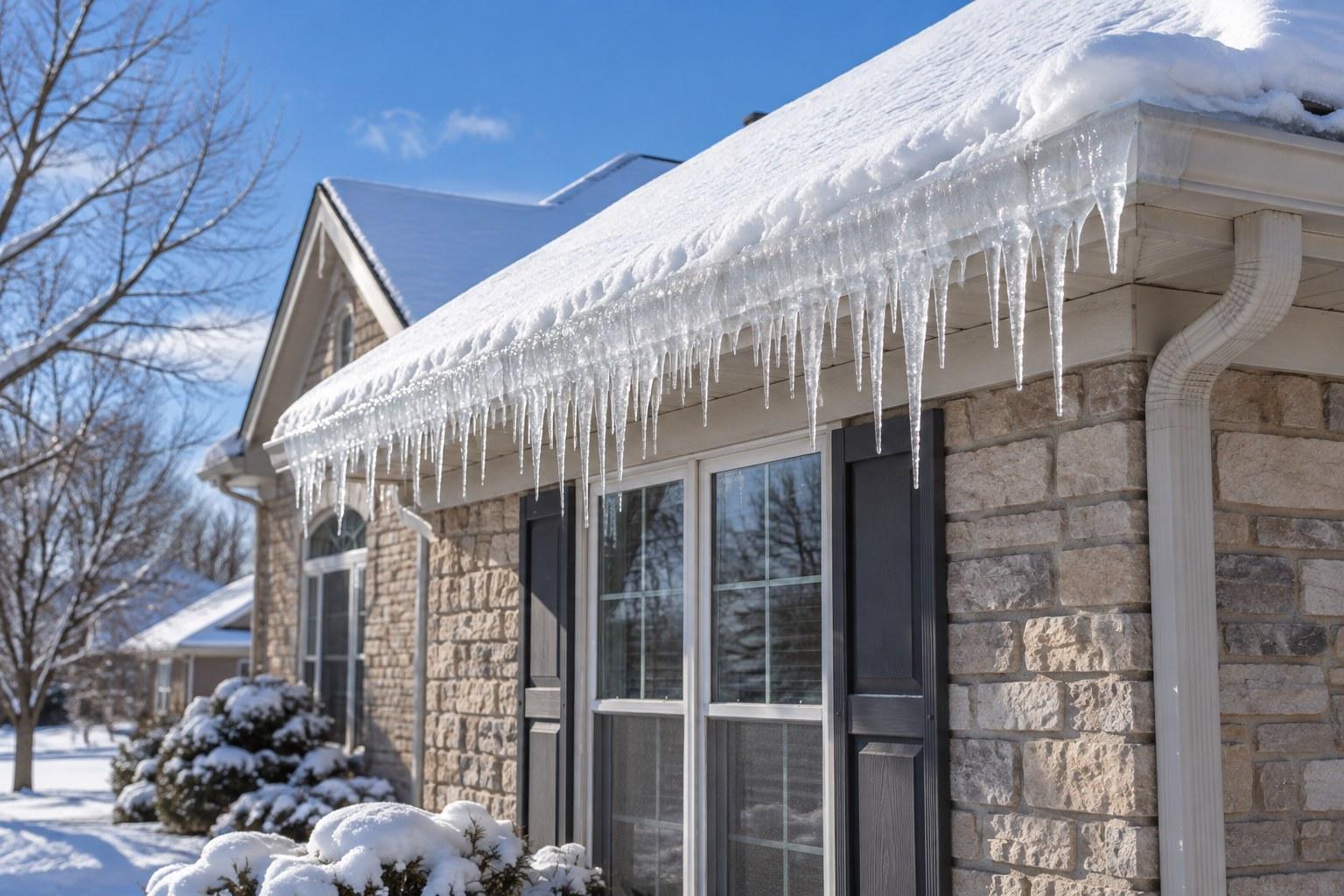
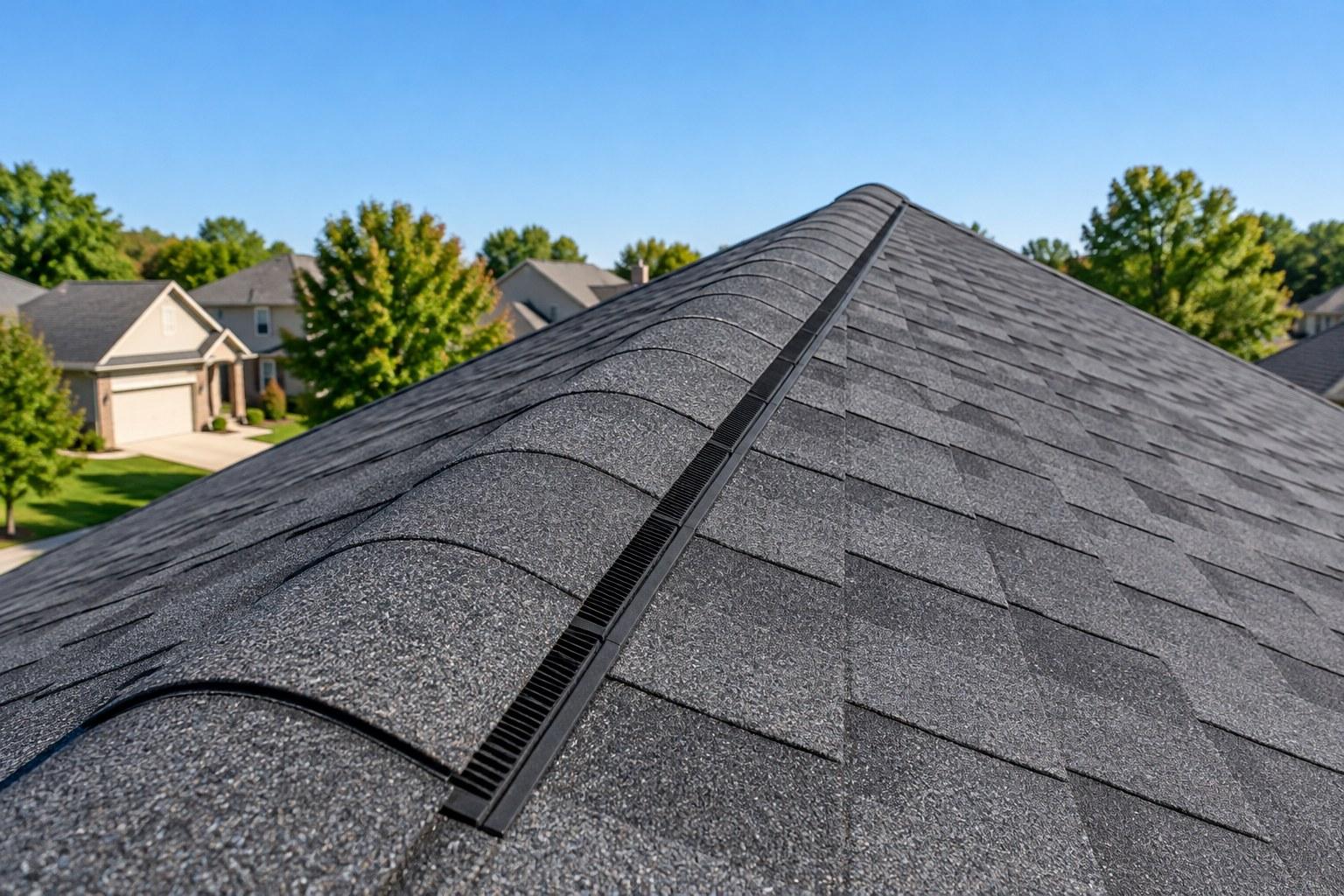
The attic plays a big role in how your roof handles winter. When warm air from the living space escapes into a poorly ventilated attic, it can melt snow on the roof and set up ice dams at the cold eaves. Check that soffit vents are not blocked by insulation and that bathroom and kitchen fans vent outdoors, not into the attic.
Spotted damage from the ground or after the last storm?
Gutter and Downspout Checklist
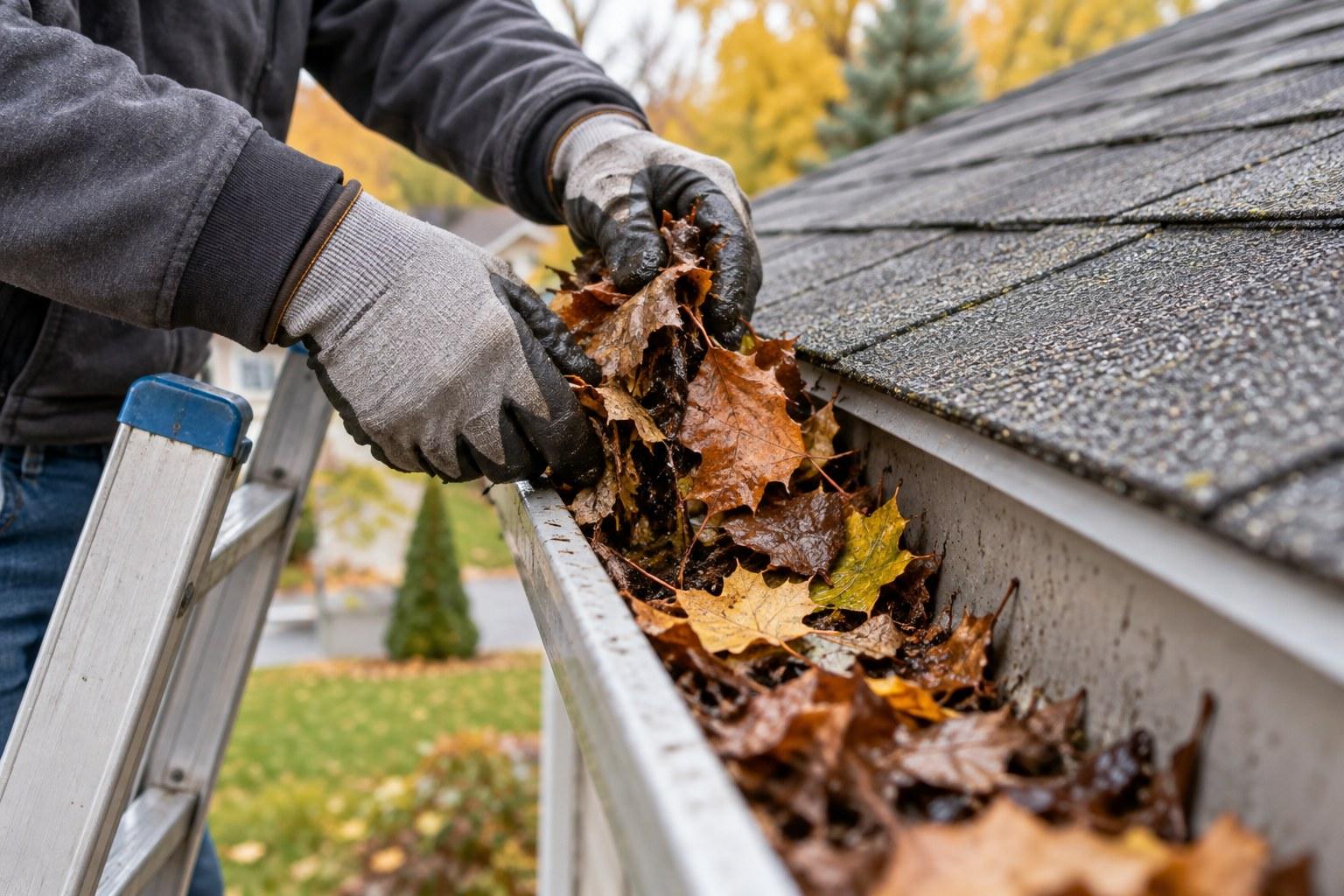
Gutters only work if water can move through them. In winter, clogged gutters hold water at the roof edge, where it freezes, adds weight and can back up under the first row of shingles.
- Clean out leaves and debris after most of the leaves have fallen from nearby trees.
- Flush the downspouts with a garden hose to make sure water flows all the way through.
- Check the slope and fasteners. Gutters that sag or pull away from the fascia will hold water and ice.
- Extend downspouts so water drains several feet away from the foundation instead of pooling next to it.
- Look for leaks at seams and corners, where sectional gutters are most likely to separate.
If your gutters need cleaning every few weeks in the fall, gutter guards can cut down on that work. Damaged or undersized gutters may be worth replacing with seamless gutters, which have fewer seams that can leak.
Siding, Soffit and Trim Checklist
Siding keeps water and wind out of your walls. When it is cracked, loose or missing pieces, cold air and moisture can reach the sheathing and insulation behind it, and that damage often stays hidden until spring.
- Walk the perimeter and look for cracked, warped, loose or missing siding panels.
- Check caulk lines around windows, doors, corner trim and where pipes or wires enter the house. Replace caulk that is cracked or pulling away.
- Inspect soffit and fascia under the eaves for soft spots, peeling paint, gaps or signs of animals nesting.
- Look for peeling paint or swelling on wood trim, which can mean water is already getting in.
Small cracks and gaps are often an easy fix with exterior caulk. Larger areas of damage, soft wood or siding that has come loose usually call for professional siding repair so the wall underneath stays dry.
Windows and Doors Checklist
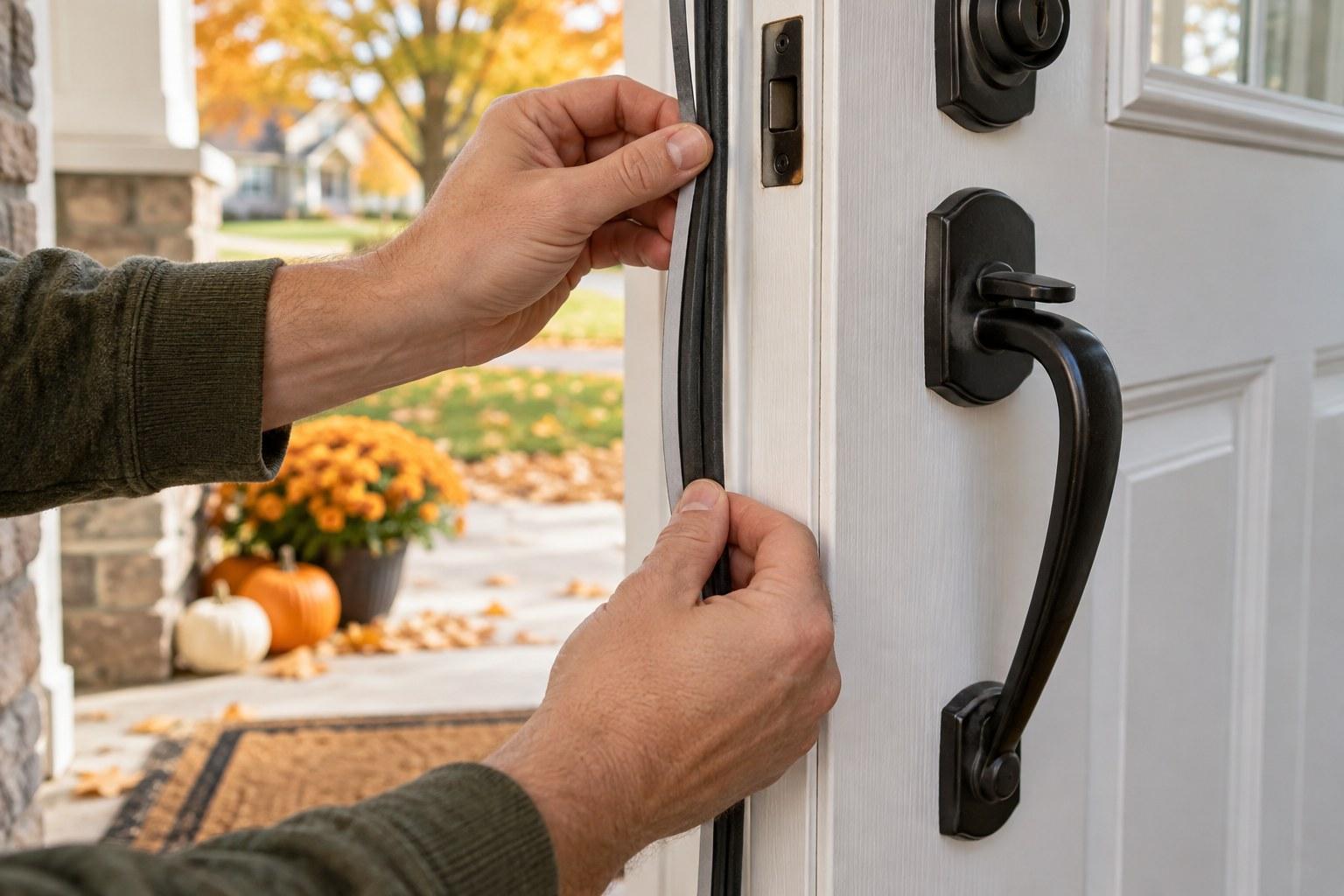
Drafts around windows and doors are one of the most noticeable winter problems, and one of the easiest to start fixing on your own.
Find the Drafts
On a cold, windy day, hold your hand or a lit incense stick near the edges of windows and doors. If you feel cold air or see the smoke move, you have a leak. Also look for daylight around the edges of exterior doors when they are closed.
Seal and Weatherstrip
Replace worn or flattened weatherstripping around doors and operable windows, and add a new door sweep if there is a gap at the threshold. Re-caulk the exterior joint between the window frame and the siding where the old caulk has cracked.
Know When Repairs Are Not Enough
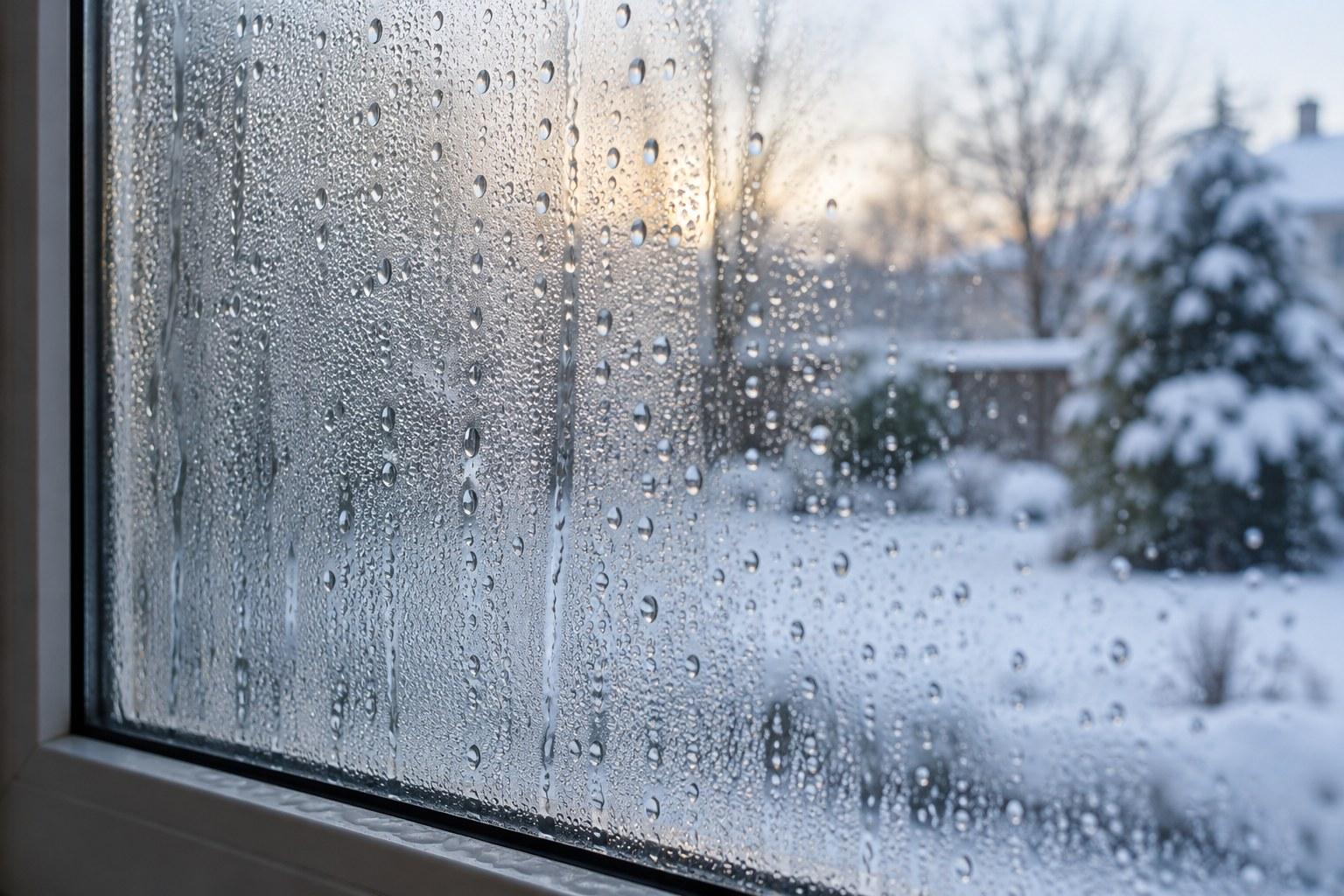
Some problems cannot be solved with caulk. Fog or moisture between the panes, frames that are soft or rotting, sashes that will not lock and windows that are hard to open or close are all signs a unit is near the end of its life. In those cases, replacement windows or a new entry door may be the better long term fix. Adding a storm door is another way to cut drafts at an exposed entry.
Outdoor Faucets, Hoses and Exterior Odds and Ends
A few quick tasks round out the exterior checklist:
- Disconnect garden hoses and drain them so water does not freeze inside the faucet.
- Shut off and drain outdoor faucets if your home has an interior shutoff valve for them.
- Store patio furniture and cushions or secure them so winter winds cannot push them into siding or windows.
- Check exterior lighting along walkways and steps, since days are shorter and icy surfaces are harder to see.
Plan Exterior Work Around Kansas City Weather
Timing matters as much as the checklist itself. Many exterior materials need dry surfaces and mild temperatures to install or cure properly. Caulk, sealants and exterior paint can fail early if they are applied on a cold, damp day, and roofing shingles seal best when the weather is still warm enough for the adhesive strips to bond.
That is why early fall is the best window for most projects in the Kansas City area. Days are often dry and comfortable, contractors can work safely on ladders and roofs, and there is still time to finish before the first hard freeze. If you wait until December, a simple repair can get pushed back by snow, ice or rain, and the problem has more time to get worse.
Start with the jobs that protect the house from water, such as the roof, flashing and gutters. Then move to siding, trim, windows and doors. Saving smaller items like hoses and patio furniture for last keeps the most important work from slipping into bad weather.
When to Call a Professional
Many items on this list are simple weekend projects. Others are better left to a pro, especially anything that involves climbing onto the roof or working near the roof edge in cold, wet weather. Call for help if you notice:
- Missing shingles, exposed decking or damaged flashing
- Water stains on ceilings or walls near exterior walls
- Gutters pulling away from the house or sagging along their length
- Soft, rotting wood on soffits, fascia or window frames
- Windows or doors that still let in cold air after new weatherstripping
A free drone inspection from Mr. Home Renewal captures close-up photos of every roof slope, vent and flashing detail, so you can see the condition of your roof without anyone walking on it. If the photos show a problem, you get honest advice on whether a roof repair will do the job or whether a bigger project makes more sense.
Frequently Asked Questions
When should I winterize my home in Kansas City?
Early to mid fall is ideal. Most leaves have dropped by then, and the weather is still mild enough for caulk to cure and for exterior repairs to be completed before freezing temperatures set in.
What is the most important part of winterizing a home exterior?
The roof and gutters. They control where water goes, and most winter damage starts when snowmelt cannot drain properly and works its way under shingles or into walls.
Can I caulk windows when it is cold outside?
Many exterior caulks are designed for warmer temperatures, so check the label for the minimum application temperature. When in doubt, plan caulking for a mild, dry day.
Do gutter guards help in winter?
Gutter guards keep leaves and debris out, which helps water keep moving through the system. They do not stop ice from forming, but clean gutters are less likely to overflow and freeze at the roof edge.
How do I know if my windows need to be replaced instead of sealed?
Fog between the glass panes, soft or rotting frames, broken locks and sashes that stick are all signs a window is failing. New weatherstripping will not fix those problems.
Is it safe to get on my roof to check it before winter?
For most homeowners, no. Roofs can be steep and slippery, especially in cold, damp weather. Checking from the ground with binoculars or scheduling a drone inspection is a safer way to see what is going on up there.
Get Your Home Ready Before the First Hard Freeze
A few hours of prep this fall can save you from leaks, drafts and emergency repairs in the middle of winter. Work through the checklist from the roof down, take care of the easy fixes yourself and let a professional handle anything that involves heights or hidden damage. Call Mr. Home Renewal at (816) 282-1651, or visit us at 833 SW Lemans Ln, Ste 216, Lee's Summit, MO 64082, to schedule a free drone roof inspection for your Greater Kansas City home.
Ready to head into winter with confidence?